Style3D Sim 2.0
Style3D Sim is a CUDA implicit physics library with a Python adapter for Newton Physics. These guides take you from environment setup, native builds, and authentication to particles, rigid bodies, cloth, deformable bodies, and material configuration.
The public repository contains the Python adapter, examples, documentation, and integration code.
The native synreal-solver backend is closed source and available only to authorized internal
developers; external users should install a matching prebuilt extension from style3d-sim-bin.
Demo Showcase
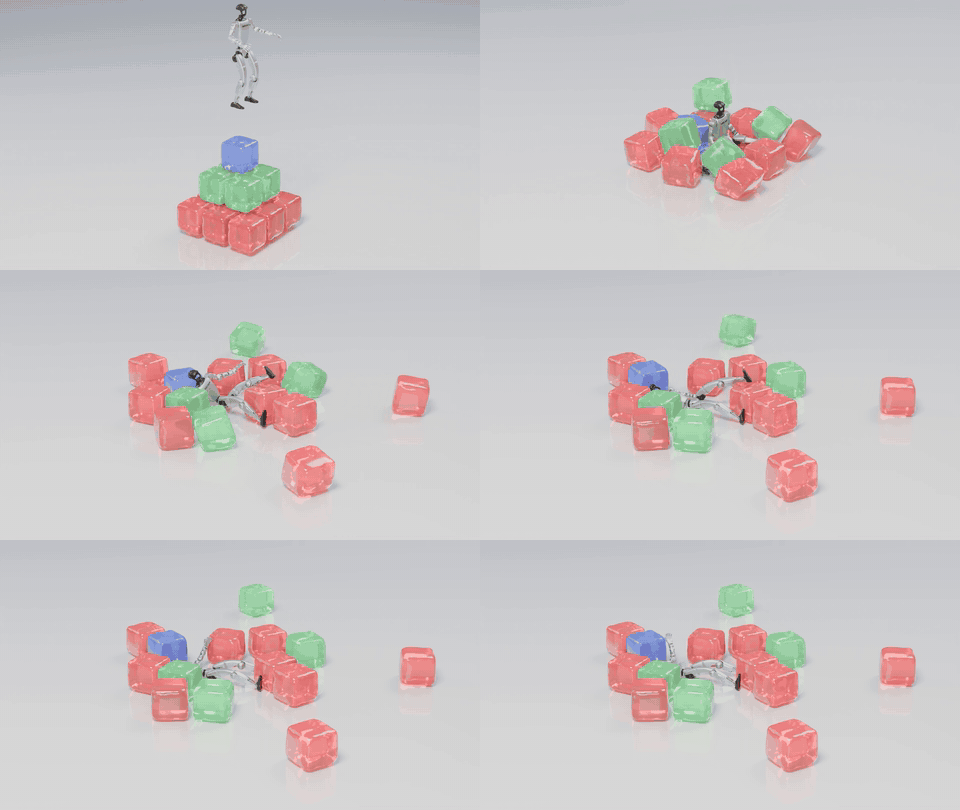
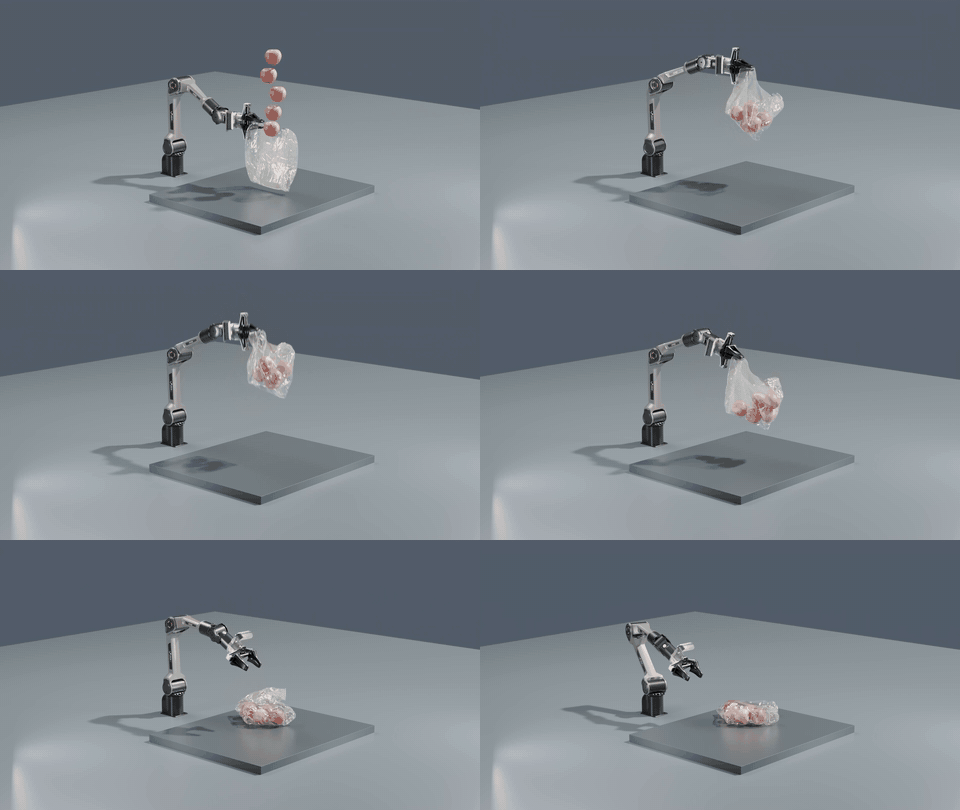
See Demos and Rendering to run these scenes. The animations are offline renders; the appearance in a real-time viewer may differ.
Where to Start
| Your goal | Reading order |
|---|---|
| First time using the library | Install, authenticate, then run your first simulation |
| Integrate an existing Newton project | Simulation loop, then rigid bodies |
| Simulate cloth or soft bodies | Cloth and tetrahedral bodies |
| Simulate fluids, grains, or fracture | Particle materials |
| Improve speed and stability | Configuration and performance |
| Find API signatures | API overview |
Three Core Concepts
Newton builds the scene. ModelBuilder defines particles, rigid bodies, joints, and collision shapes;
model.state() creates state buffers.
Style3D Sim advances physics. NewtonSolver.step() accepts Newton states, controls, and contacts
and performs the native CUDA solve.
Viewers display the result. Real-time viewers and offline rendering consume the simulation output. Use a headless mode or a standalone simulation script when no window is needed.
Documentation builds and simulation runs have different requirements
The documentation needs only Python and MkDocs and builds on a standard GitHub runner. Running the solver requires a compatible NVIDIA GPU, the native extension, and valid credentials.
Supported Workflows
Common workflows include particles, tetrahedral bodies, Style3D cloth, affine rigid bodies,
contacts, joint drives, particle fluids, and bonded granular materials.
Some Newton features require additional adaptation: generic triangle elasticity must use Style3D attributes,
and requires_grad=True does not guarantee that the native solve is differentiable.
For adapter errors, read the relevant guide and Troubleshooting.